A picture is worth a thousand words
And a piece of Rock-on-a-Roll is worth
at least 600 pounds of stone
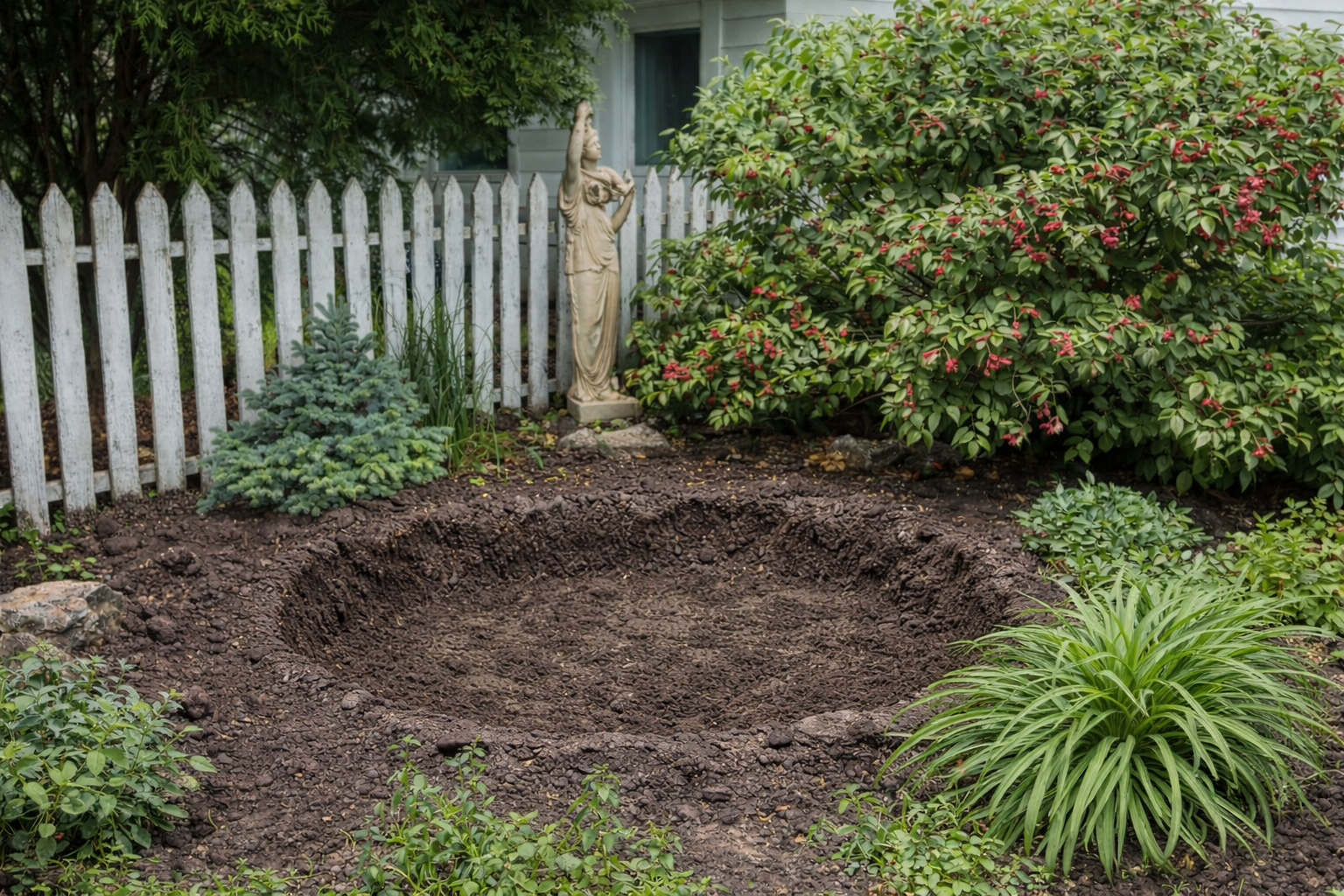
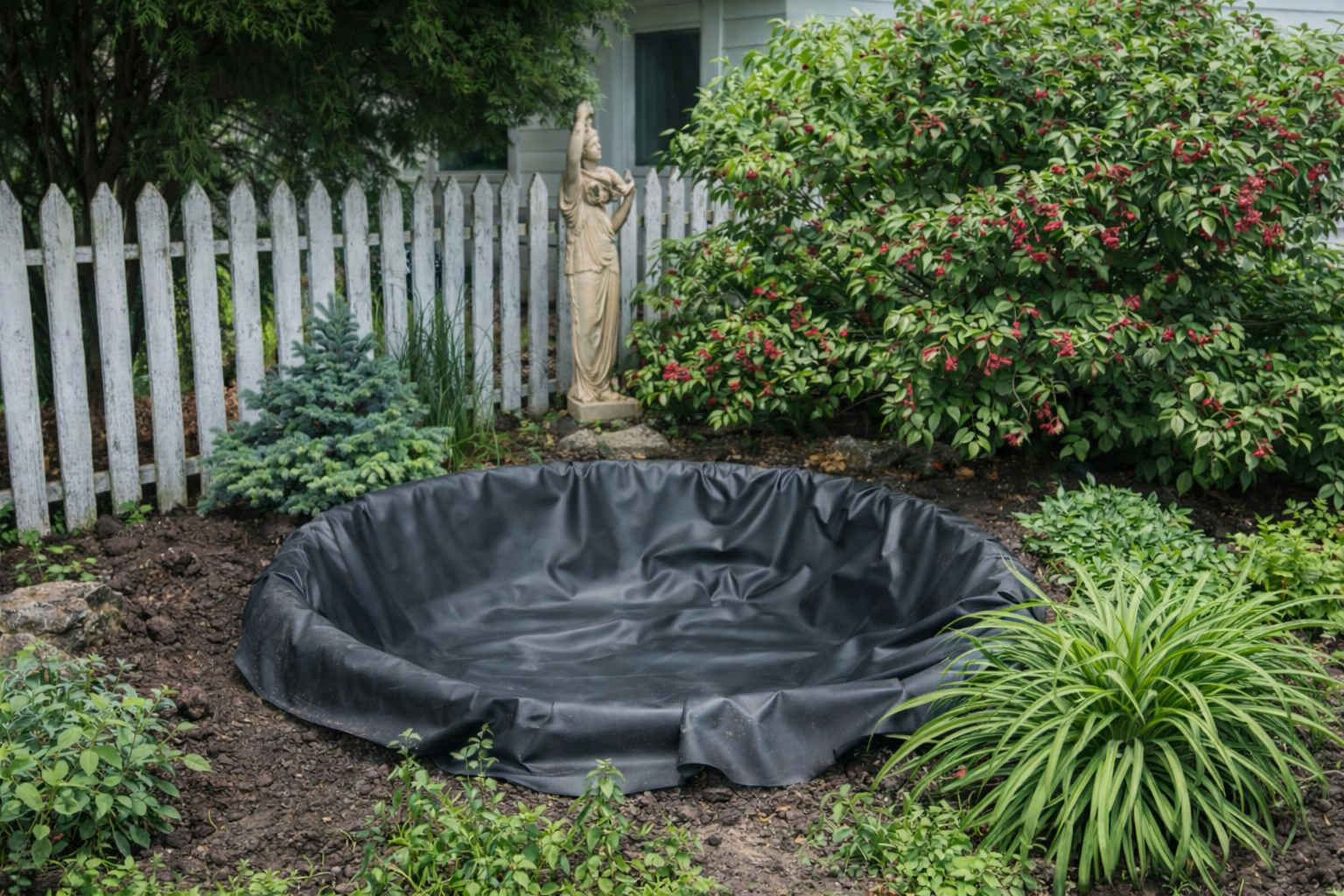
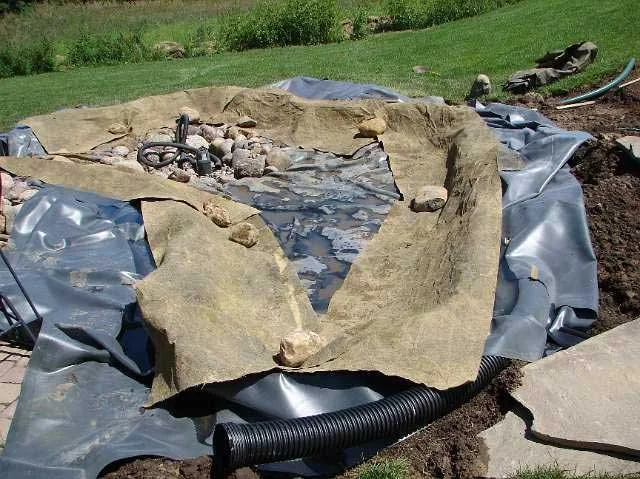
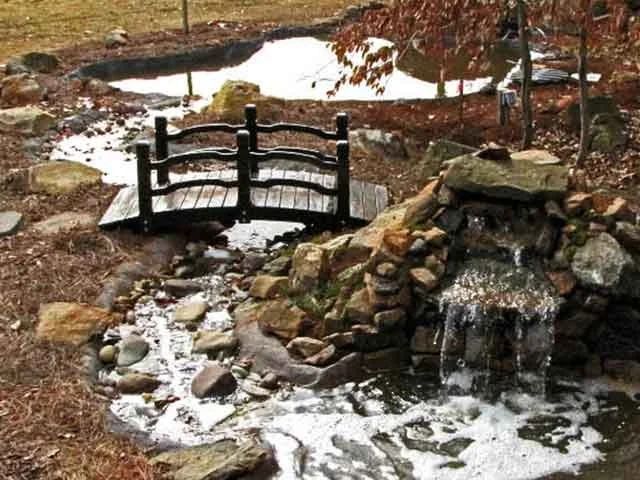
This is an early stage of a small homeowner built pond. After digging it out, John and Cordelia (the homeowners) lined it with 45 mil EPDM rubber.
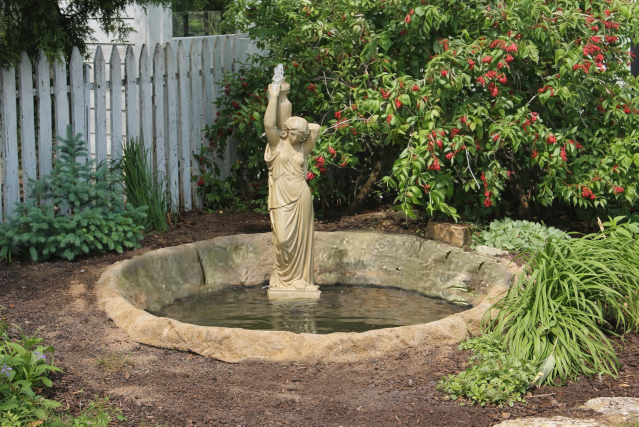
Hiding liner is a big challenge in any pond. Rather than using boulders, which are heavy, unstable and take up pond space, John and Cordelia used Rock-on-a-Roll, which conformed nicely to the shape of the pond.
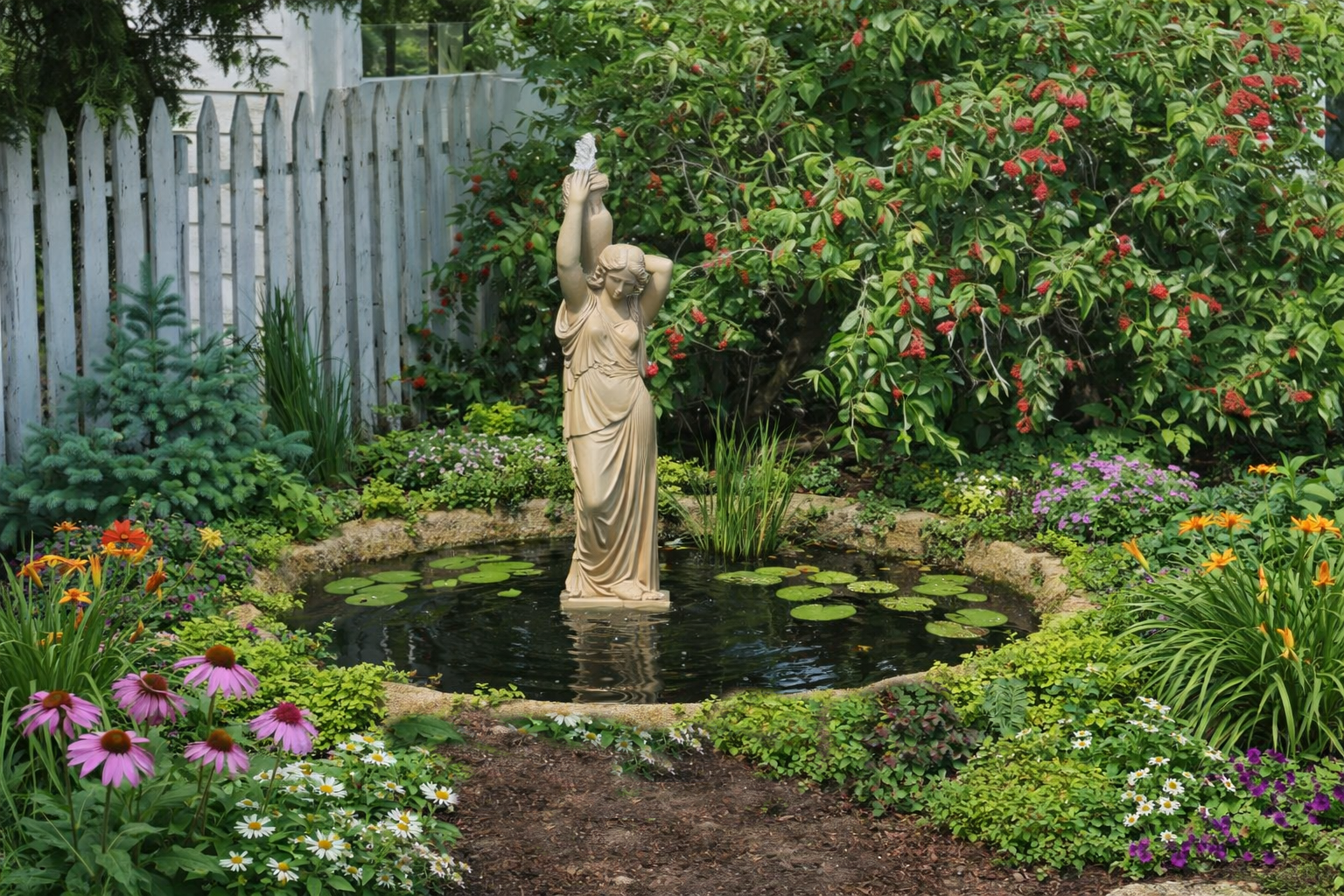
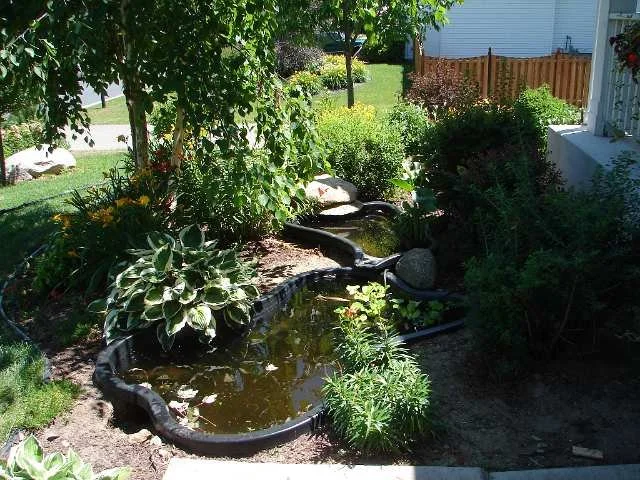
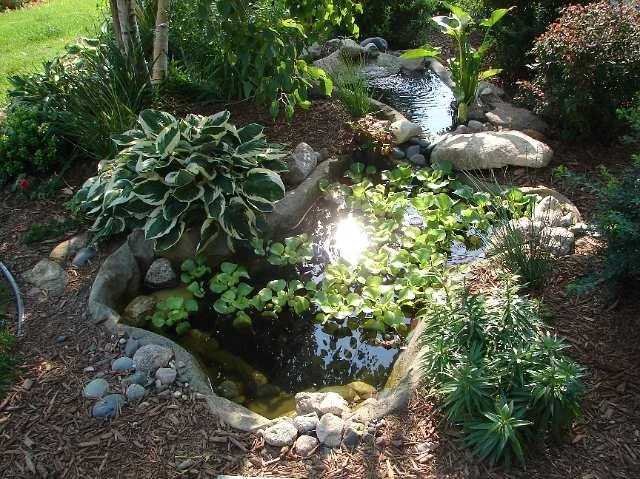
After adding a few plants, and of course water, they had created a simple but very charming small water feature.
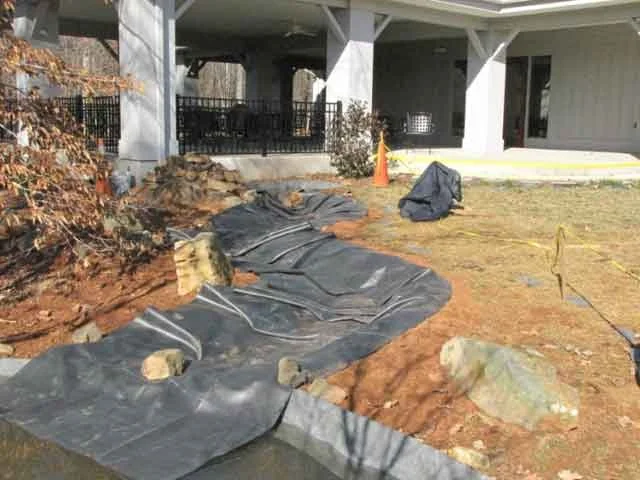
This is a much larger project built by us, Aquatica Water Gardens. Here you see seven rolls of Rock-on-a-Roll that have been laid along the pond edges, covering the rubber. Each roll is 3 feet wide by 8 feet long, and weighs about 7 pounds.
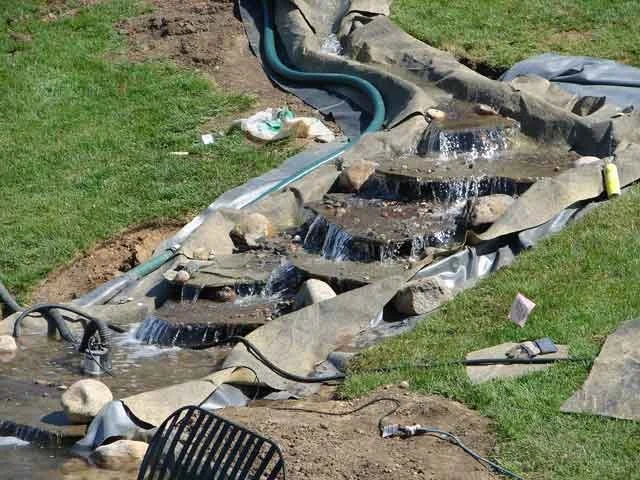
This is the lower part of a stream that flows into the pond. Thin stones are used to create a water cascade, and Rock-on-a-Roll is used along the edges.
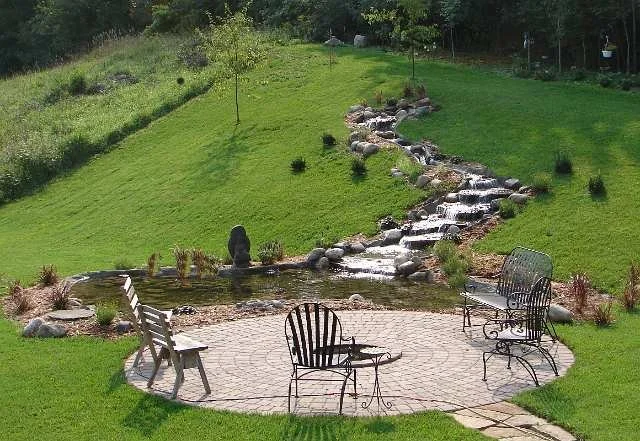
This is the completed project. Because there is no thick ring of boulders, plants will easily be able to grow over the edge, creating a soft and natural look. You can find step-by-step details of this construction project in the raised-edge method section of this website.
The edges of preformed ponds are just as unattractive and hard to hide as those of rubber lined ponds. They are also usually very small, so you don't want to waste valuable pond space with boulders.
Rock-on-a-Roll takes up very little space, and makes hiding the edge simple.
This close-up view shows the color and texture variation in sandstone brown Rock-on-a-Roll. There are varying shades of brown with a little gray and even a small amount of green. The coloration mimics that of a beautiful weather stone.
Slate gray Rock-on-a-Roll has predominantly shades of gray, with brown and green highlights.
This side-lit photo of a sandtone roll shows the texture that is so important for making Rock-on-a-Roll look like natural stone.
This next set of pictures comes from Bob H. who sent these comments in with the photos:
"We would be honored for you to use these pictures on your website. Credit goes to the Green Garden Group,Sullivan Park, Twin Lakes Retirement Community, Burlington, NC."
"All the plants we use are native to North Carolina. We just came in from planting our first plants in the large pond. They are native blue Iris. We will be adding more as they arrive."
"Thanks again for your help."
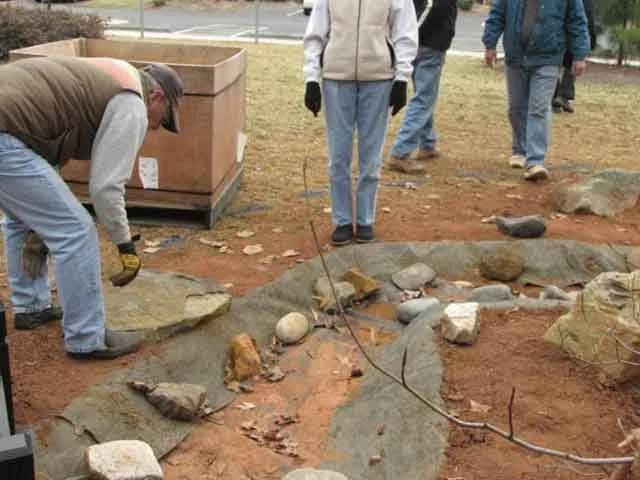
You can see the beginning stage of a stream that will flow into a lower pond.
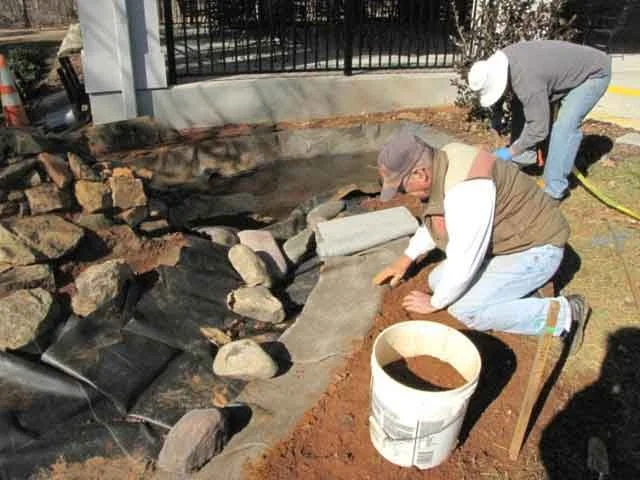
Here is the slate gray Rock-on-a-Roll being held in place by a few stones along the bottom and soil along the top edge.
Because the full width of Rock-on-a-Roll was not needed for the sides, the group cut the rolls in half lengthwise and were able to get twice as much length.
Here is the newly finished stream running into the lower pond.
This is the same project looking upstream from the bottom pond. Rock-on-a-Roll comes in brown and slate gray. The gray can be seen here.
This next project, also built by John and Cordelia, shows an entirely different use for Rock-on-a-Roll. Their front yard had a steep slope that they wanted to eliminate with a retaining wall. They built the wall with pressure treated lumber, then covered it with Rock-on-a-Roll.
John and Cordelia didn't want to hide any seams, so we custom-made their Rock-on-a-Roll so that they could face the entire wall with one piece (please call us if you would like more information on custom rolls).
This is the finished wall.
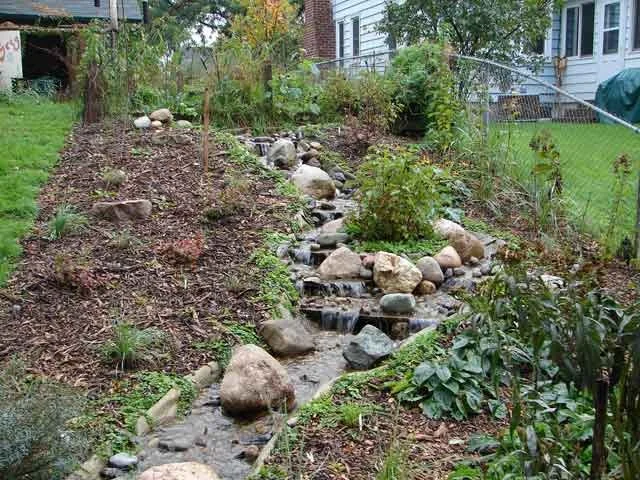
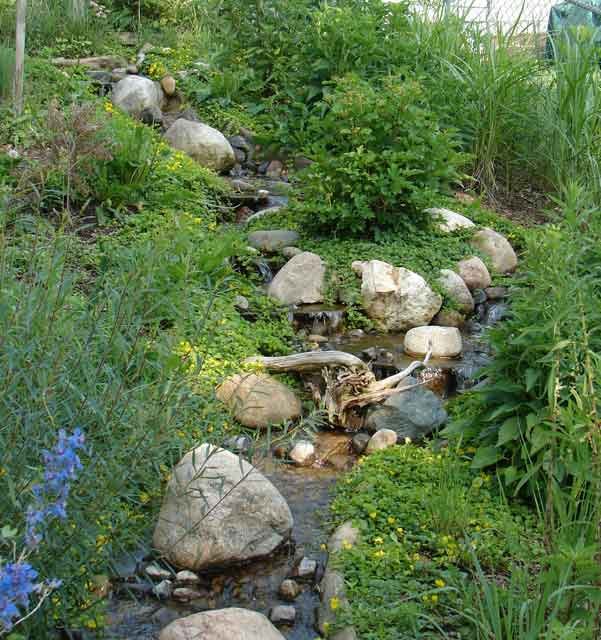
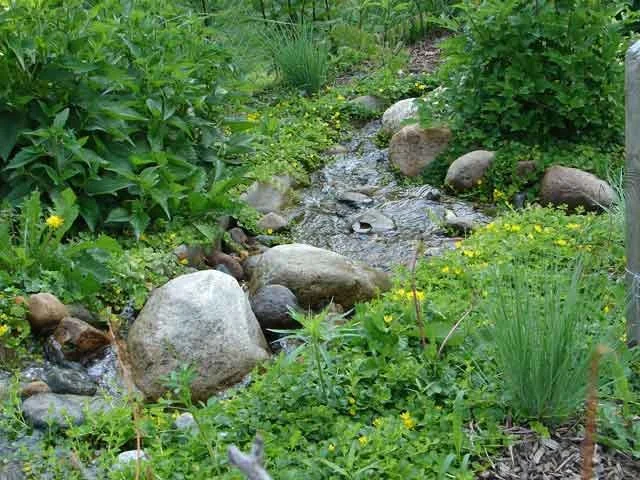
This is a stream build by Bob, a teacher in the winter and do-it-himself pond builder in the summer. Bob loves natural stone, and he wanted to use a lot in his project. However, using Rock-on-a-Roll gave him the freedom to leaves large gaps where plants could grow over the edges, thus avoiding an overly rocky appearance.
This is the same stream after the plants have grown in for a season.
The stream from above.
Bob put in a small stone bridge just above where the stream enters the lower pond.
These pictures, generously sent in by another homeowner, show him installing gray Rock-on-a-Roll in an existing pond.
As you can see, it lays out easily and can be cut and molded to any shape.
Rock-on-a-Roll is easy to hold in place. Here it is held on the bottom with stones, and on the top with garden soil.
This is the "before" picture for another homeowner built pond (John and Cordelia - yep, same John and Cordelia - they've built three water features on their Minneapolis city lot.)
Five rolls of brown Rock-on-a-Roll are laid out along the edge of the pond.
The finished pond and waterfalls. Detailed pictures of this project can be seen in the "Raised-edge method" section of this website.
This is a detail of the of the edge of the pond.
Under moist, shady conditions moss can grow on Rock-on-a-Roll. After a few years, this pond's edge was completely covered with moss.
Skimmers are great for keeping pond maintenance easy, but their plastic covers can be difficult to hide. Here is a cover with Rock-on-a-Roll cut to shape and glued on with contact cement.
When placed over the skimmer, the cover blends in with the landscape.
Here is another very creative use of Rock-on-a-Roll, dreamed up by members of St. James Catholic Church of Denver. They created a nativity scene starting with just a few wooden stands.
They laid 6 foot wide rolls (custom-made) of Rock-on-a-Roll over small boxes and various other items to create the basic topography.
On top of that, they created a charming nativity scene.
They covered seams with a small amount of dried sheet moss, creating a finished and beautiful scene.
Next: More pictures from our customers.